game server engineering
Rust PvE Content and Operations
Rust PvE server configuration, custom plugin content, encounter design, performance safeguards, and reviewed deployment operations.
No public links are recorded for this case study.
Challenge and constraints
A durable PvE world requires content that can evolve with configuration, plugin compatibility, performance limits, and predictable deployment controls.
Constraints
- Plugin and configuration compatibility must be reviewed
- Performance limits require safeguards
- Production-impacting deployment requires dry-run and schema checks
What I owned
Technical ownership, content-systems direction, plugin review, configuration management, deployment design, and live-operations planning.
Ownership
- Curate plugin and configuration inventory
- Design PvE encounters and progression
- Review performance safeguards
- Maintain deployment and wipe runbooks
Decisions and implementation
The decisions define the boundary; the implementation records what was delivered inside it.
Decisions
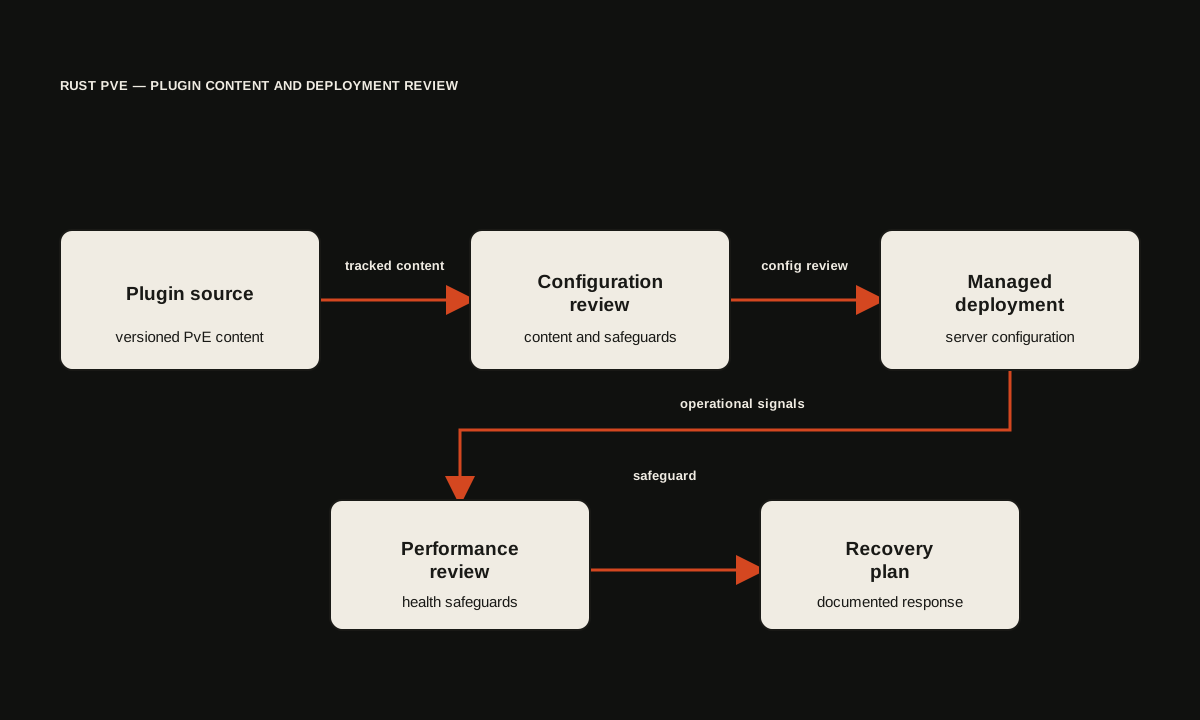
- Keep managed plugin source in version control
- Use dry-run and schema checks before production-impacting deployment
Implementation
- Versioned plugin and configuration inventory
- PvE encounter and progression content
- Managed deployment
- Performance recovery safeguards
Validation
Evidence is checked against the surface it is meant to demonstrate.
Checks
- Shell syntax checks
- JSON validation
- Deployment dry run
- Performance-watchdog review
Evidence-backed outcomes
Each delivered result is paired with the public proof basis that supports it.
- Established a versioned PvE content inventoryBasis: Supported by repository-backed plugin and configuration review.
- Documented performance safeguardsBasis: Recorded in performance-watchdog review.
- Defined repeatable deployment and wipe proceduresBasis: Supported by syntax, JSON, and deployment dry-run checks.
Evidence gallery
Each artifact is selected for what it explains and reviewed for public safety.